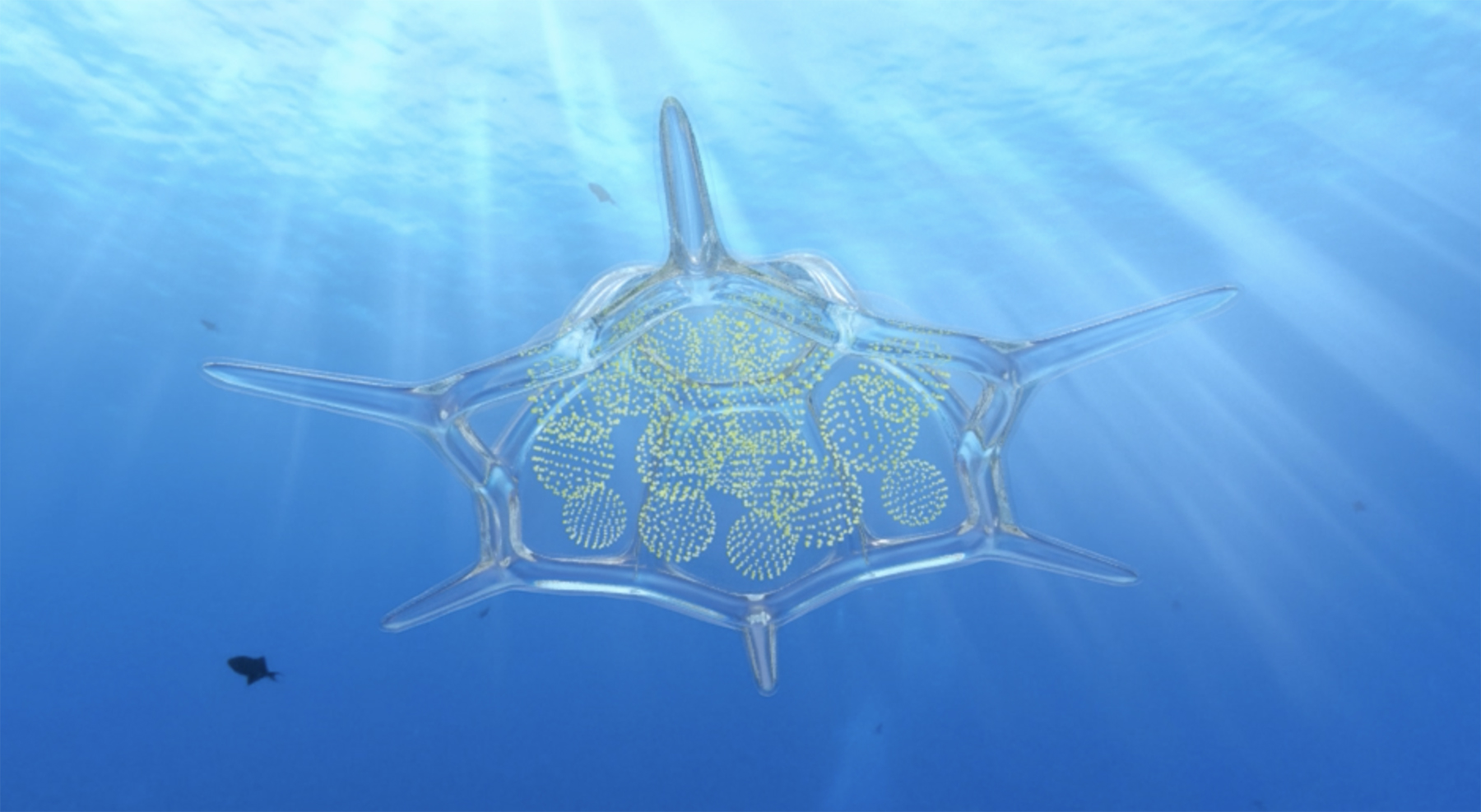
Illustration of the “ unicellular microscopic muse” behind the inspiration for the “Pankton-Pod Coral’ Nursery designed to be employed as a prototype project for Laguna de Maya.
“I chose the shape because I found it both beautiful and functional. The domed structure, with a flat bottom and flanges, makes it incredibly sturdy, which is crucial for aquatic environments.
Corals generate energy in two ways: by capturing tiny nutrient particles that float nearby and through photosynthesis carried out by symbiotic algae called zooxanthellae.
The design includes open spaces that allow nutrients to flow through and sunlight to reach the corals, supporting these essential functions.
For the stars, I chose high-fire ceramics because of their low porosity, making them ideal for subaquatic environments. I also added a coral-like texture to help gametes cling to the surface.
The metal structures employ the Biorock method, which applies low-voltage electricity to metal, creating an accretion process that coats the structure with layers of calcium carbonate. This is the same substance coral skeletons are made from and, when properly grown, it creates a self-healing substrate that is five times stronger than traditional concrete.
The low-voltage electrical current also boosts the immune systems of corals attached to the structure, as well as those in the surrounding waters.”
— Mara G. Haseltine, 2026

No responses yet