
About the Expo:
In the age of the Anthropocene, coral reefs are suffering unprecedented mass bleaching-extinction events around the globe. This exhibition embraces the utopian concept of ‘Geotherapy’: which both acknowledges humanity’s role in the destruction of our shared biosphere and offers nature-based often indigenous sustainable solutions to heal it. In this body of work, Artist, Explorer and Director of the Geotherapy Institute for art and field science Mara G. Haseltine creates a grand gesture with this prototype project and hopes these intricate underwater sculptural structures will reabsorb into their environments, thus becoming healthy, biodiverse reefs that help protect and soften shorelines against storm surges and rising sea levels.
This hybrid project merges art and science through sculptural coral nurseries inspired by marine plankton and the endangered reefs of Laguna de Maya, Cuba. Created by Mara G. Haseltine with scientists, divers, and local collaborators, the project combines Biorock technology and Sextual Coral Larval propagation to restore reef-building
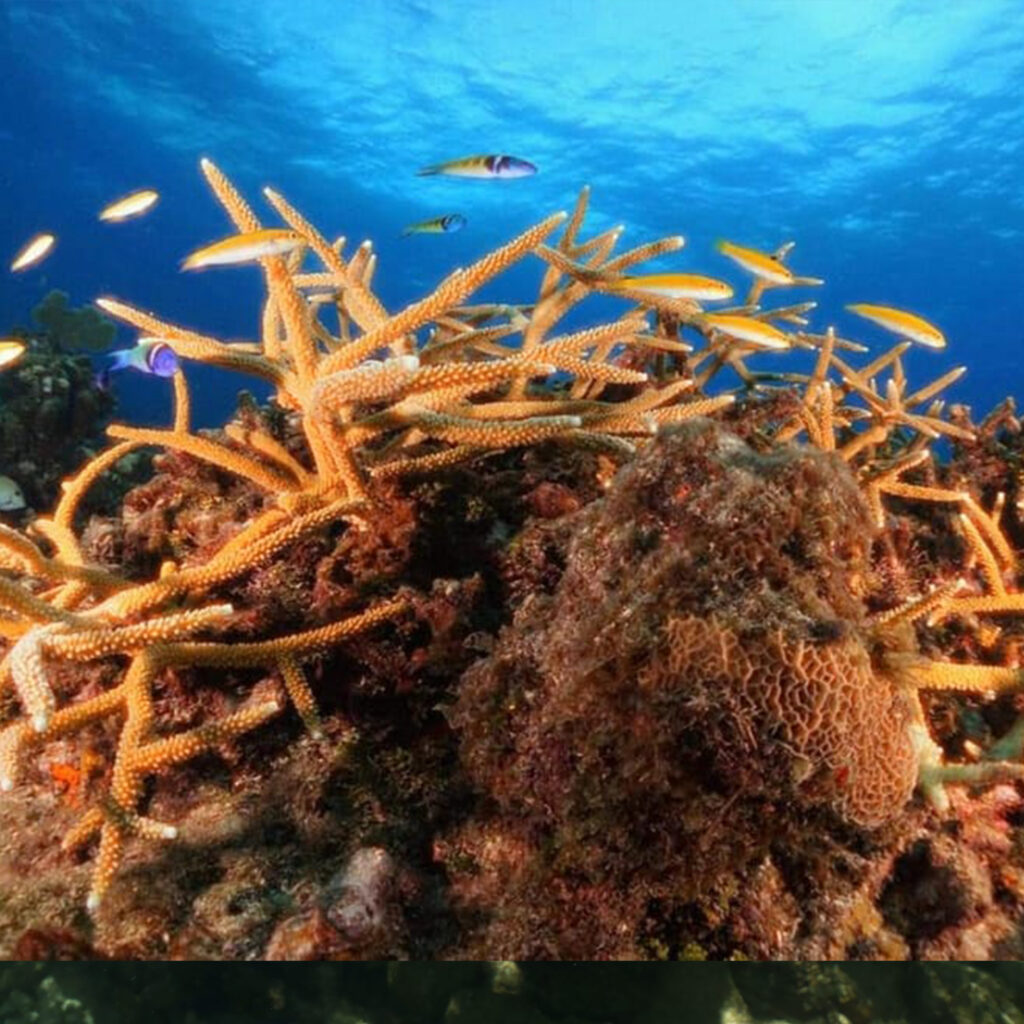
Acropora without plastic or traditional concrete. Each image and sculptural study in this mini-expo references biological forms, material processes, and restoration strategies, reflecting the Geotherapy Institute’s mission to create “blueprints to heal the planet” through art, field science, and nature-based solutions. Located East of Havana in the Matanzas region, Laguna de Maya remains one of the Caribbean’s last refuges for relatively intact Acropora — reef-building corals now functionally extinct throughout much of the region. Slightly cooler waters and isolation have helped preserve this fragile ecosystem. Underwater photography by partner Luis Muino captures the biodiversity and haunting beauty of the site.The exhibition also features a collaboration with Cuban poet and shaman Isrealito Matanzas, whose poetry reflects the region’s spiritual connection to the sea.
DESCRIPTION of WORKS:
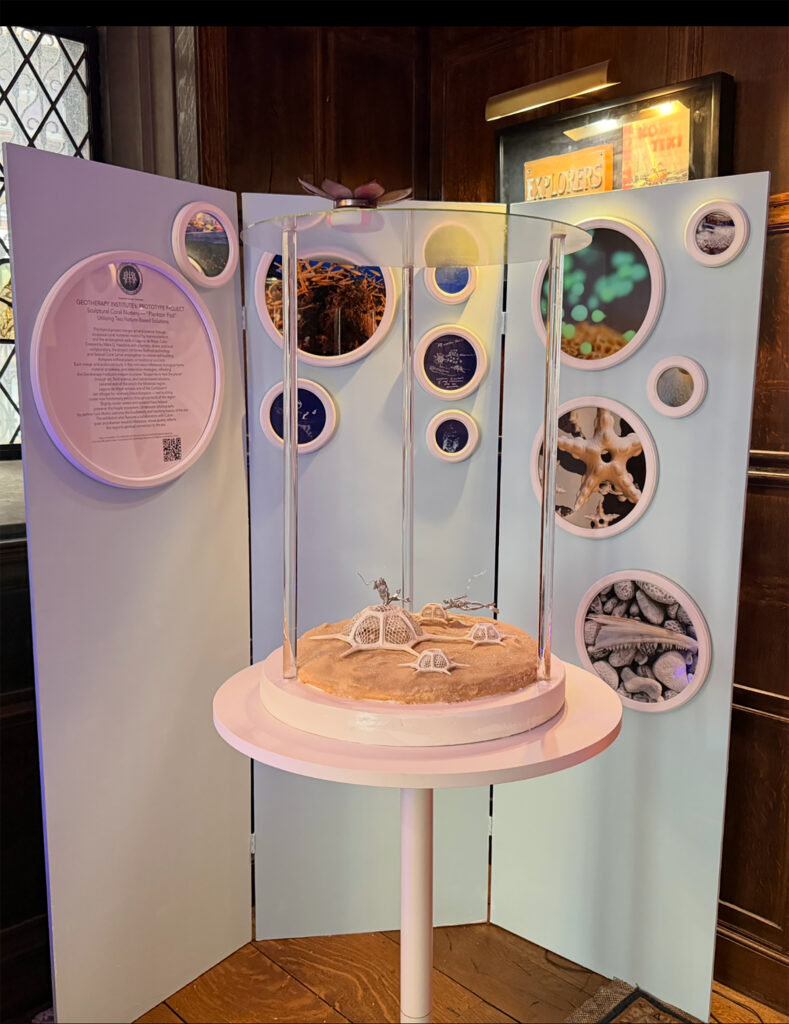
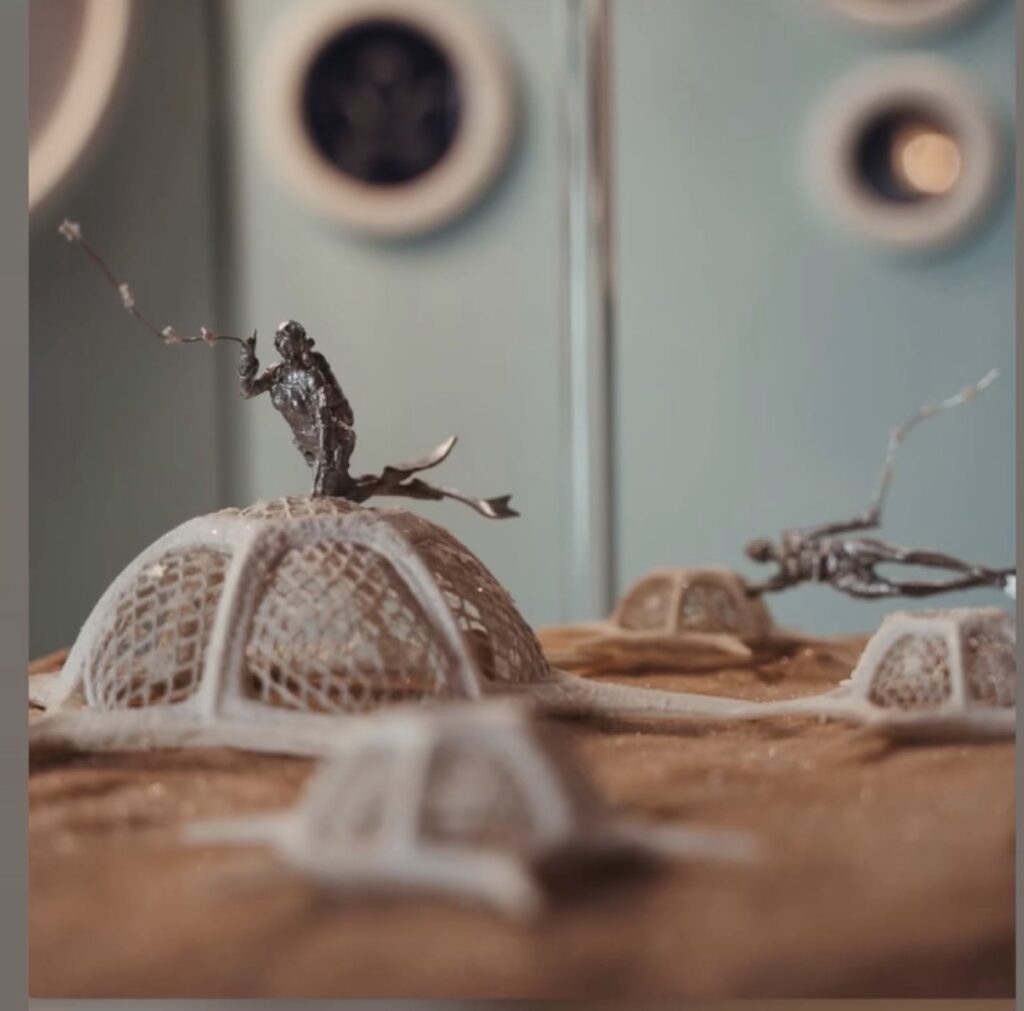
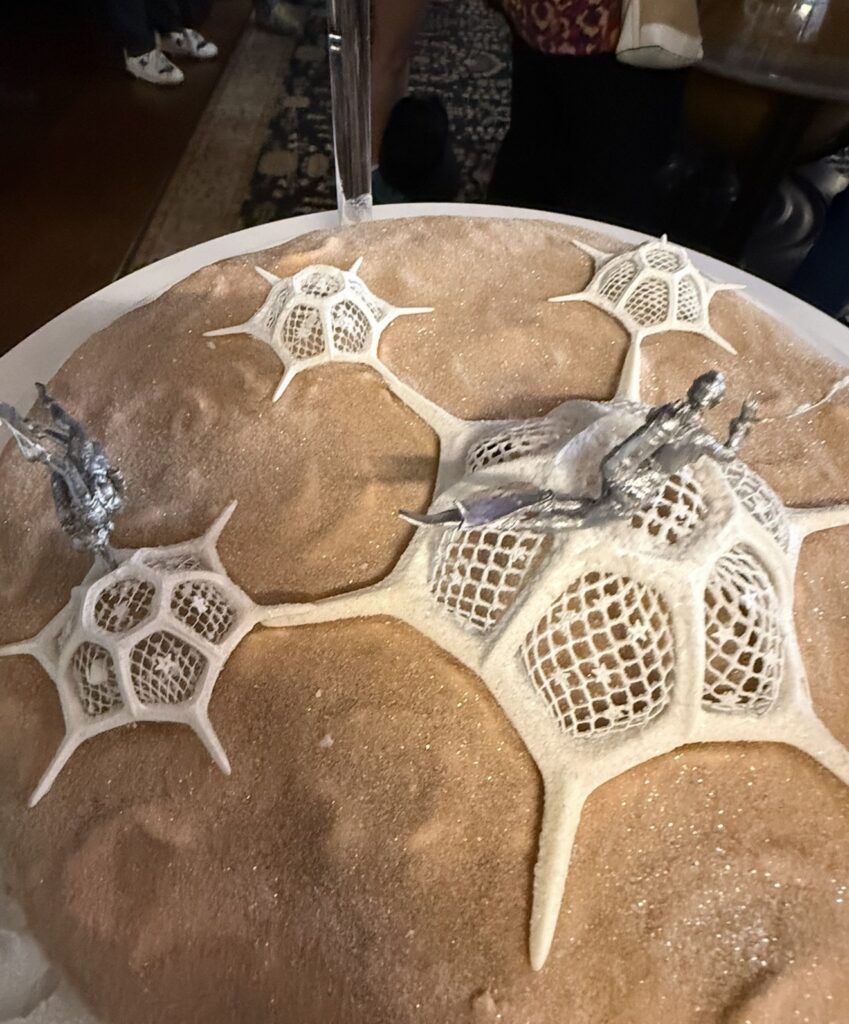
- Plankton Pod Coral Nursery (Model): This to scale model depicts a novel design for a coral nursery the artist plans to implement in Cuba, integrating two coral restoration strategies. It combines a Biorock structure that accretes calcium carbonate, forming a substrate three times stronger than concrete, with a coral sexual larval propagation technique that seeds starshaped substrates with genetically robust, cross-fertilized coral gametes. The nursery would act as both a structure to affix the coral larval substrates with a structure that would also act as a wave attenuator protecting fragile protecting shorelines and a hub for biodiversity -Mara G Haseltine, Mixed Media, 70”X20”X20”, 2026
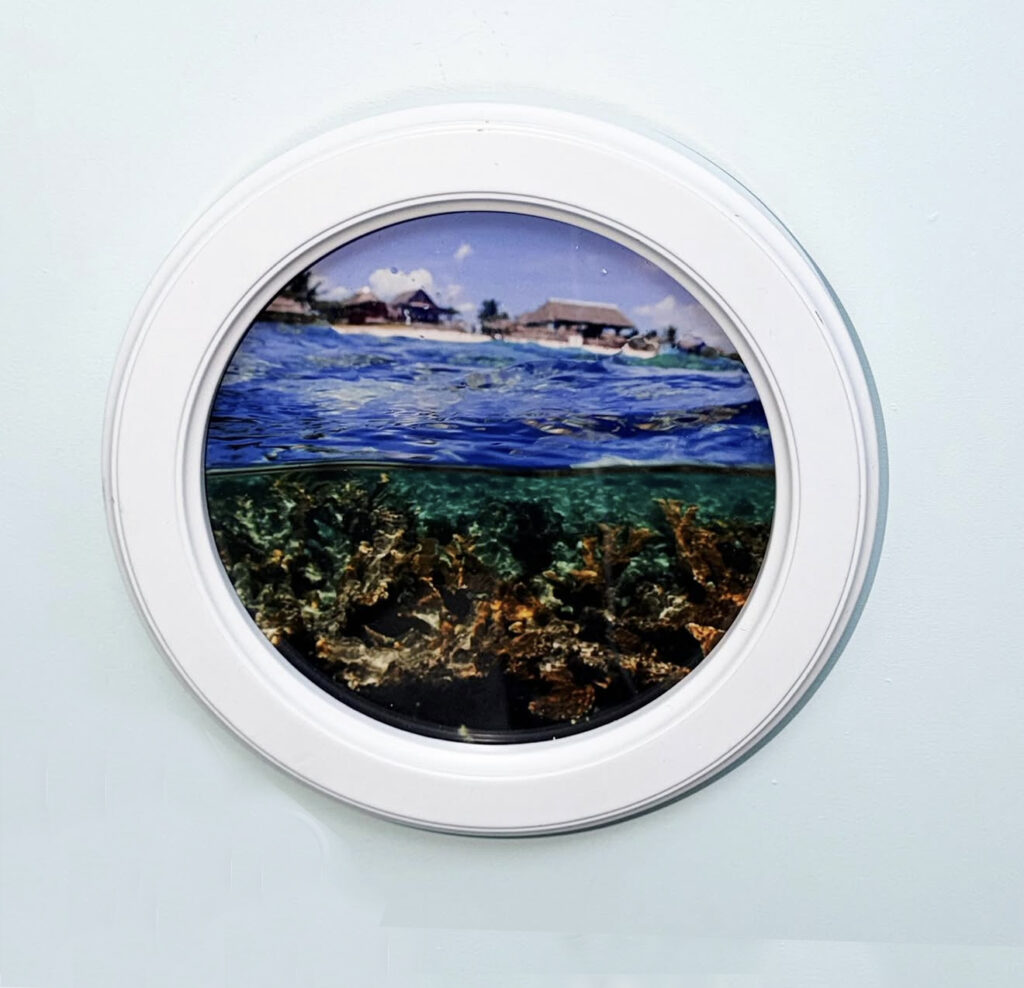
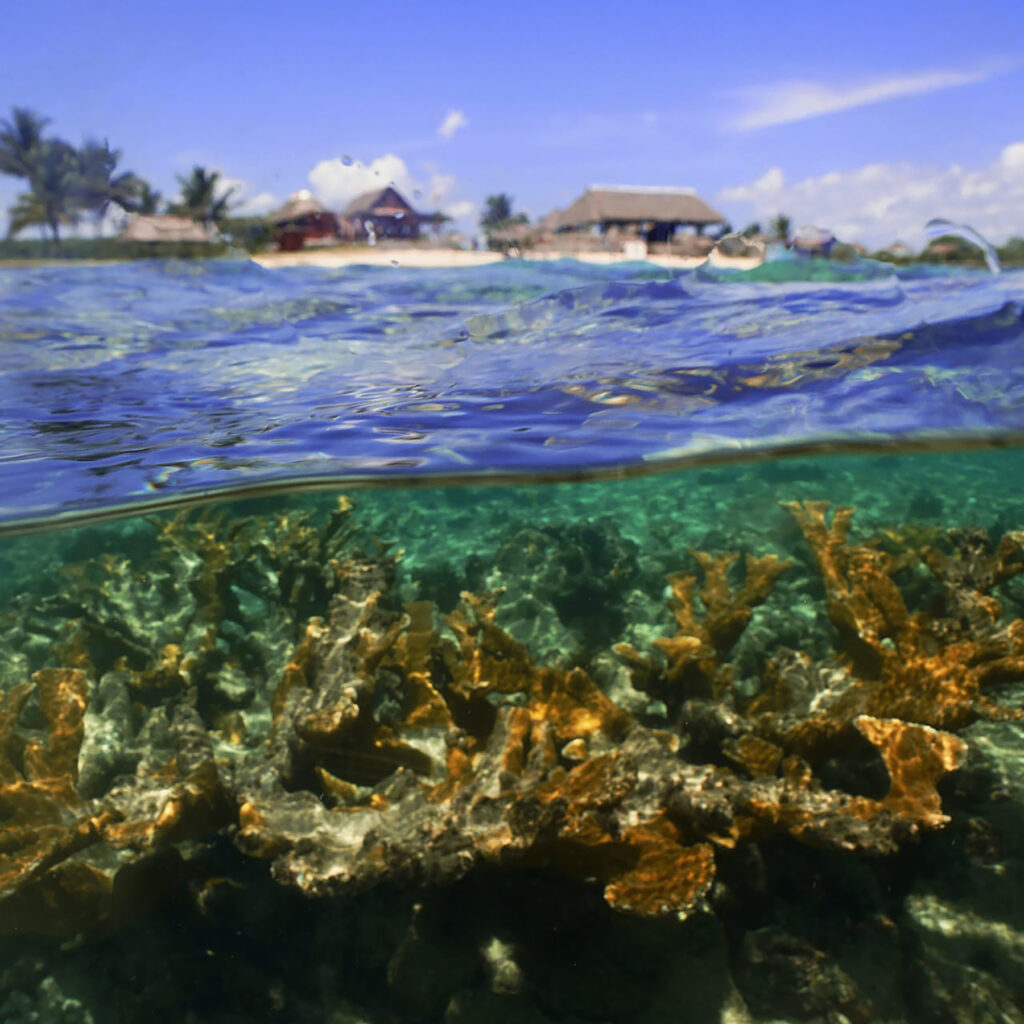
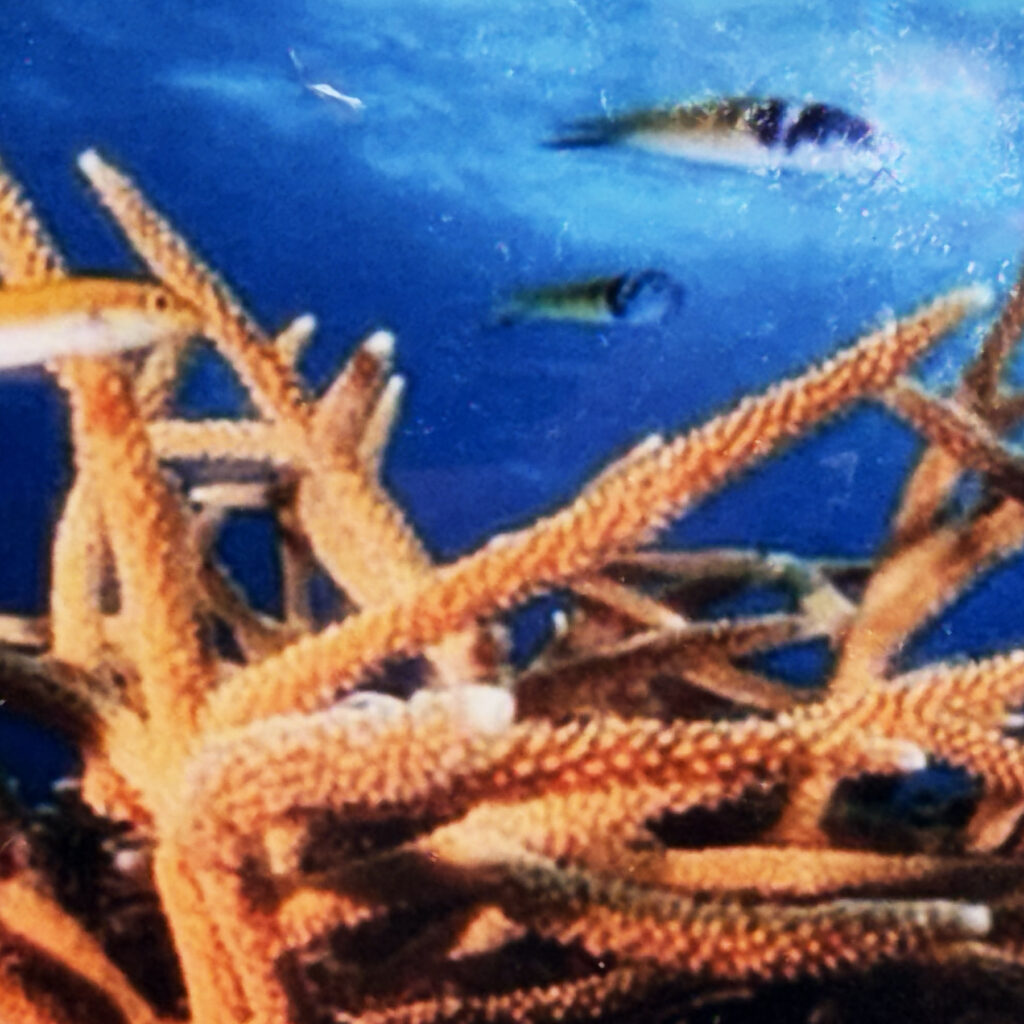
- Laguna de Maya-Playa de Corales1 this Amphibious photograph is taken at the Laguna de Maya site this past year by Geotherapy Parter, and dive master Luis Muino. The healthy Acropora hard coral reef can be seen in the foreground. Luis Muino, Mara G Haseltina, rchival photograph, 6”X6”X1”, 2026
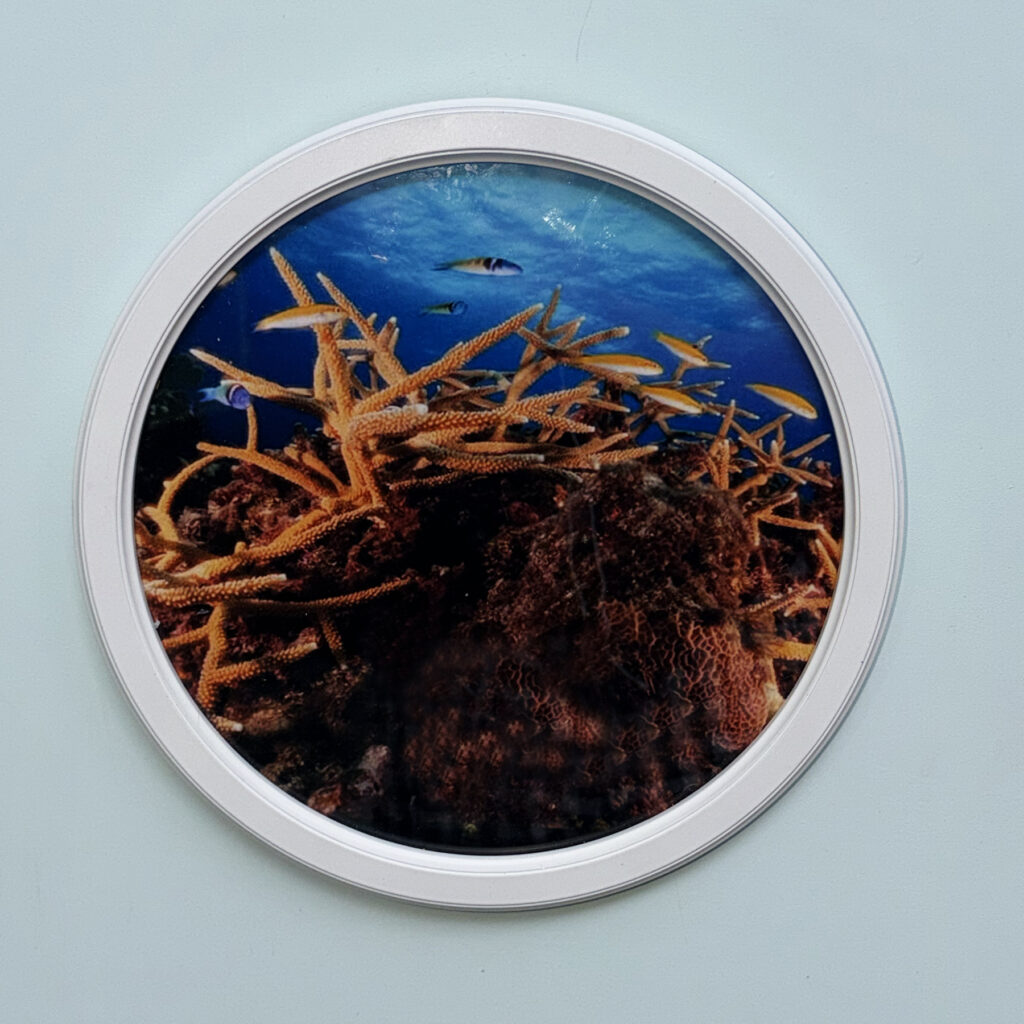
- Laguna de Maya-Playa de Corales2: This underwater photograph of the healthy reef clearly depicts how it is a shelter and biodiversity hot spot for a plethora of life. Hard corals create the architecture or a living scaffolding upon which soft corals, sponges, invertebrates and fish shelter and thrive. Luis Muino, archival photograph, 12”X12”X1”, 2026
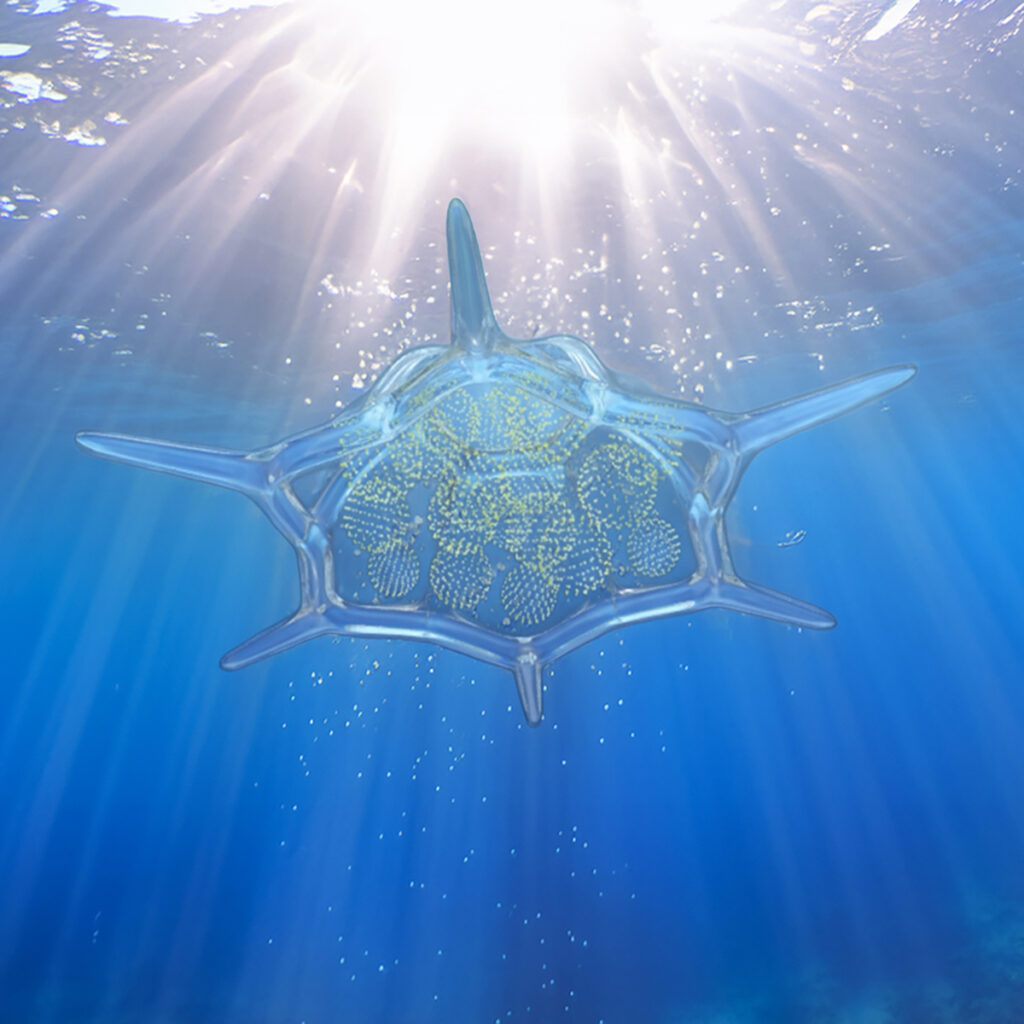
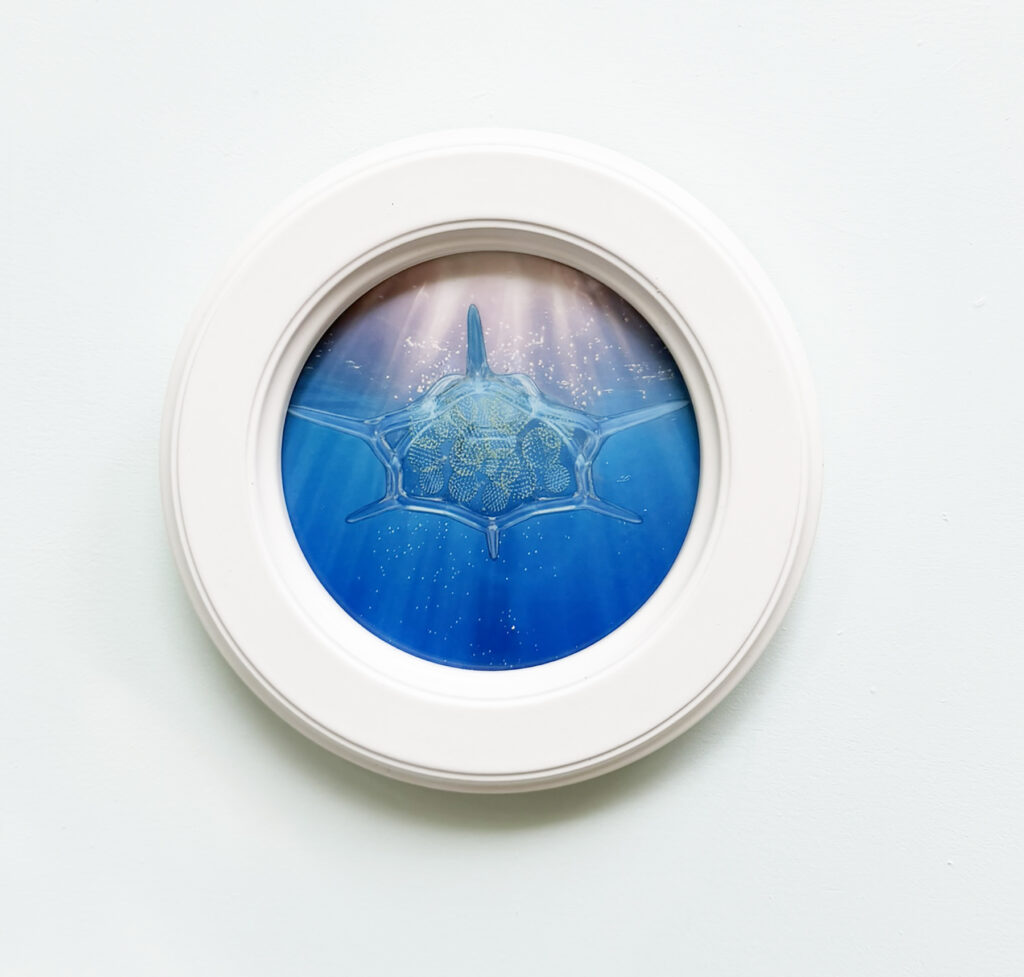
- Distephanus Boliviensis in Motion: The “Plankton Pod ” design inspired by the Distephanus Boliviensis, a flat-bottomed unicellular phytoplankton, enabling it to drift gracefully and slowly through the photic zone, so as to allow for maximum absorption of sunlight for the photosynthetic algae that power it. -framed archival photo print, from animation, 3”X3”X.5” Mara G Haseltine 2026
- Plankton Pod Coral Nursery Sketch: The “Plankton Pod” drawing is initial drawing depicting a novel design for a coral nursery the artist plans to implement in Cuba, integrating two coral restoration strategies. It combines a Biorock structure that accretes calcium carbonate, forming a substrate three times stronger than concrete, with a coral sexual larval propagation technique that seeds star-shaped substrates with genetically robust, cross-fertilized coral gametes. The nursery would act as both a structure to affix the coral larval substrates with a structure that would also act as a wave attenuator protecting fragile shorelines.
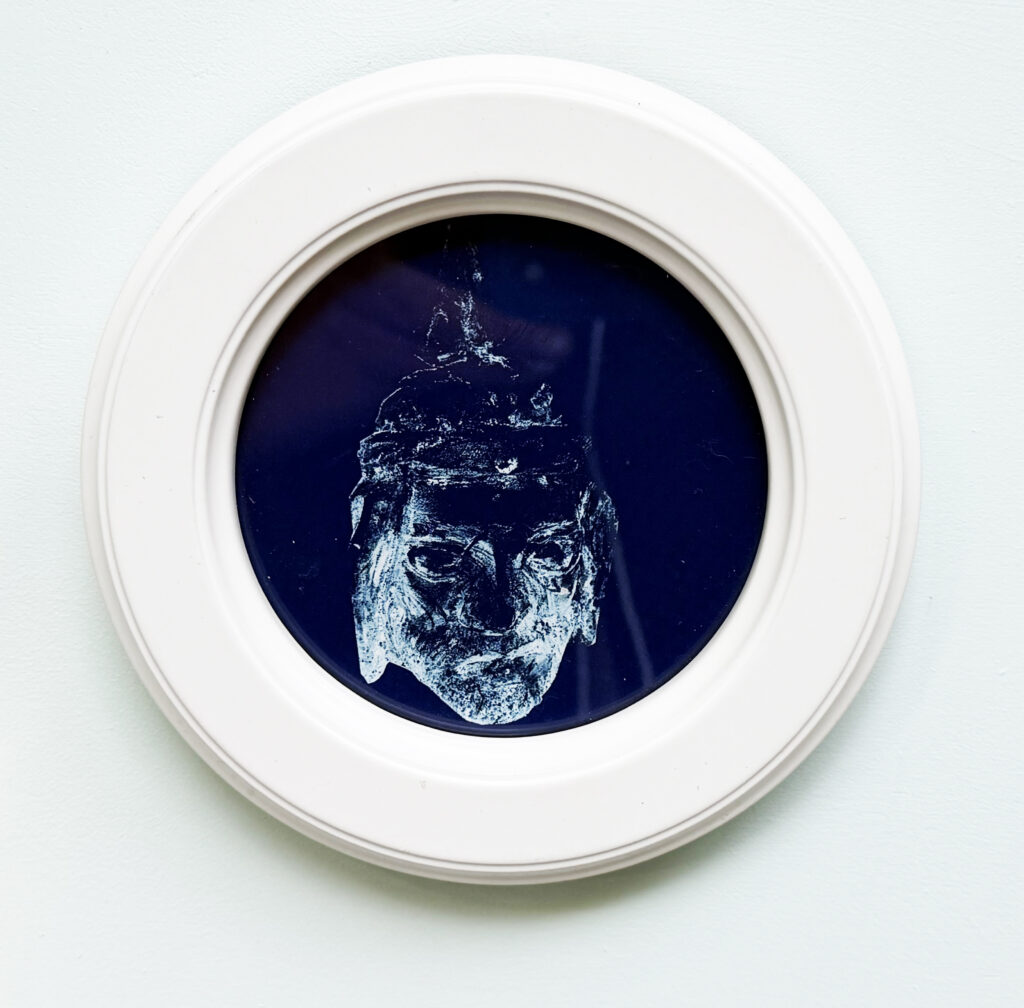
- Mask of Loki: This print depicts the Mask of Loki, inspired by a piece in the collection of Israelito Matanzas, a shaman and poet collaborating with the artist. The concept draws on the mythological figure of Loki as the ocean’s sovereign, exploring the interplay between cultural narratives and environmental themes. Framed Archival Print 3”X3”x.5” 2024
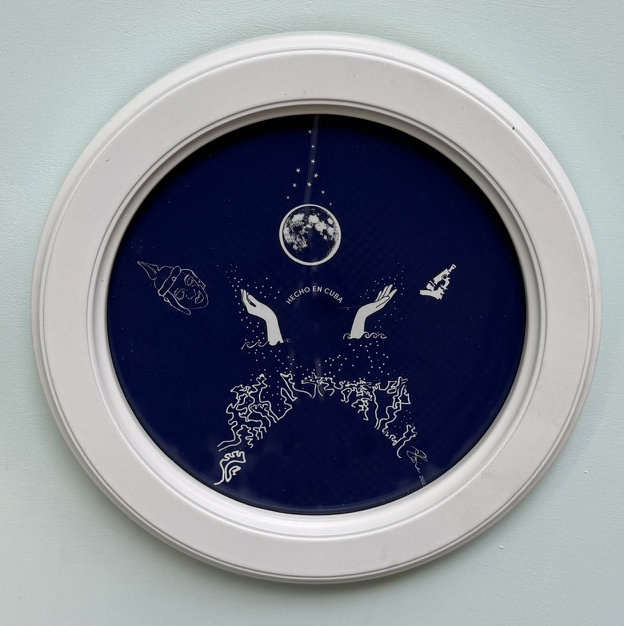
- Back image for “Estrellas del Océano: “Stars for the Ocean”: This is the image on the back of the “Estrellas del Océano: “Stars for the Ocean” like a coin it features the hands of the Goddess Yemenja reaching up to a full Moon and Stars from hard-coral during a coral spawning which typically occurs on or around the full moon. On the left is a depiction of the “mask of Loki, while on the right is a microscope representing the science used to cross fertilize the coral gametes for optimal strength resisting rising sea temperatures and coral bleaching events. The words “hecho en cuba” wrap around the hole in this design as the goal is to fabricate them in ceramic in Cuba. Framed archival print 3”x3”X.5 2024
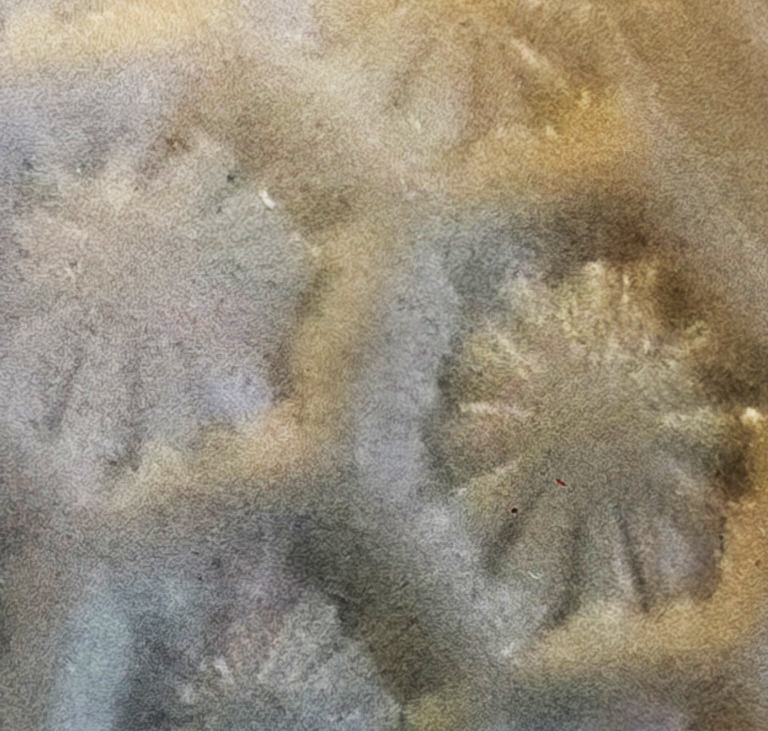
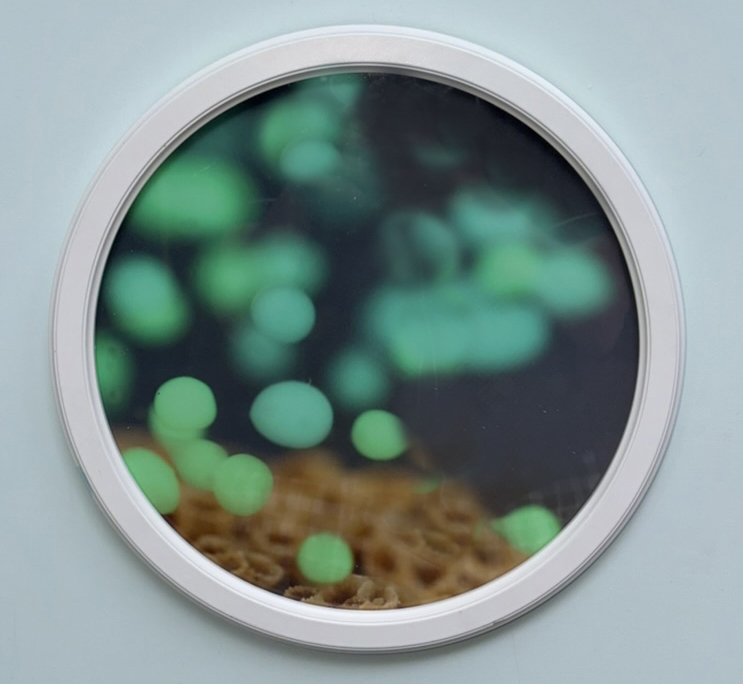
- Je mange la mort pour dîner … “I eat death for dinner….”.Is s a still from a video played in a loop. The image looks similarto the way in which coral larvae settle on coral skeletons and its inclusion is an homage to one of the nature-based solutions included in this restoration design, Sextual Coral Larval Propagation. A method by which coral gametes are captured during full moon coral spawning events and cross breed for endurance. The fertilized gametes are placed on substrates, in our case made from hard fire ceramic, cultured in nurseries and then placed in the nooks and crannies of hard coral reefs for restoration. The droplets literally glow which were created using green fluorescent protein from jellyfish and fall slowly and settle on coral skeletons only to fade and have the cycle repeat itself again. This artwork symbolizes Earth’s resilience and its capacity to regenerate even after mass extinction events. Framed archival photograph from video still 12”x12” x.5” 2015
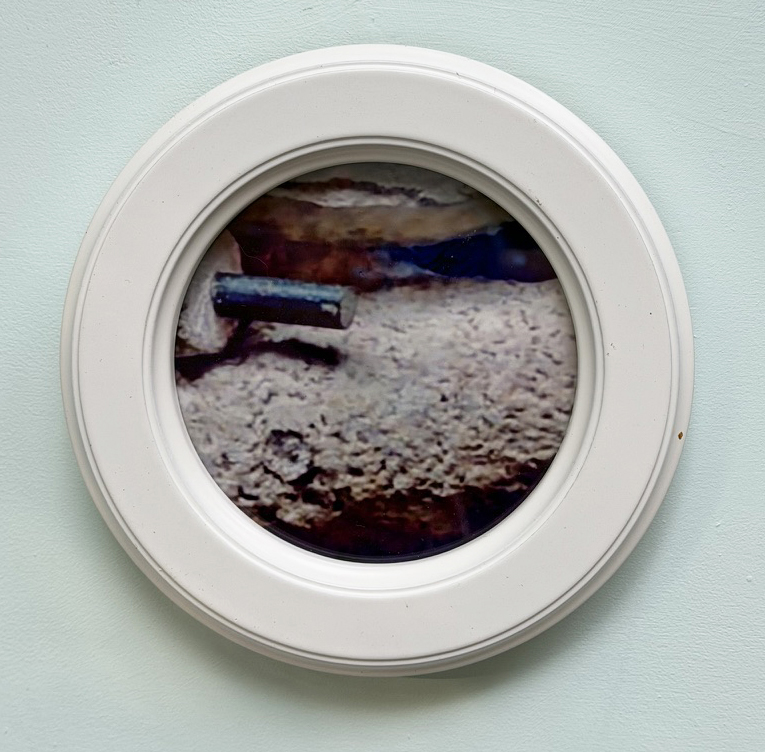
- Biorock Samples: This is a photograph taken by the late inventor of the Biorock mineral accretion process, Wolf Hilbertz, of about two years of calcium carbonate mineral accretion growth around rebar. This mineral accretion method creates material five times the strength of traditional concrete Framed archival photograph 3”X3”X.5”, date unknown
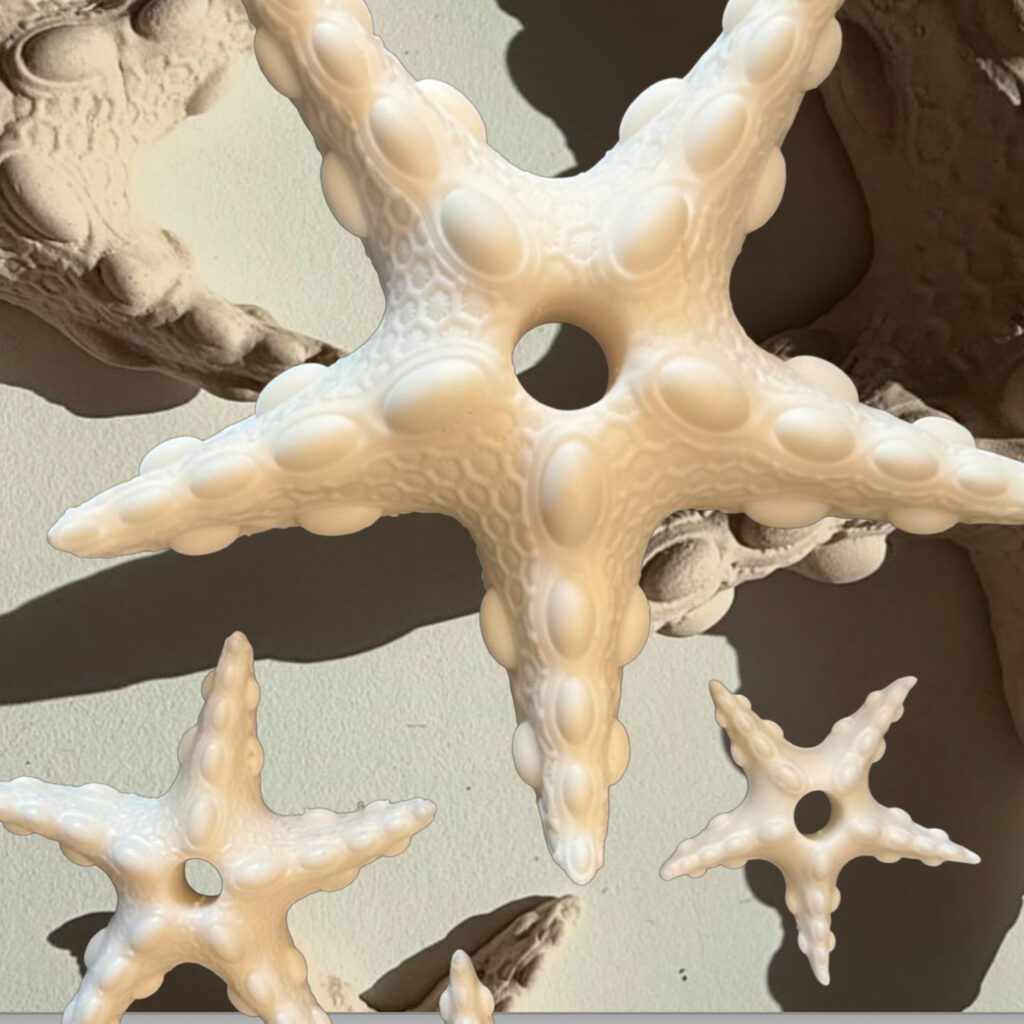
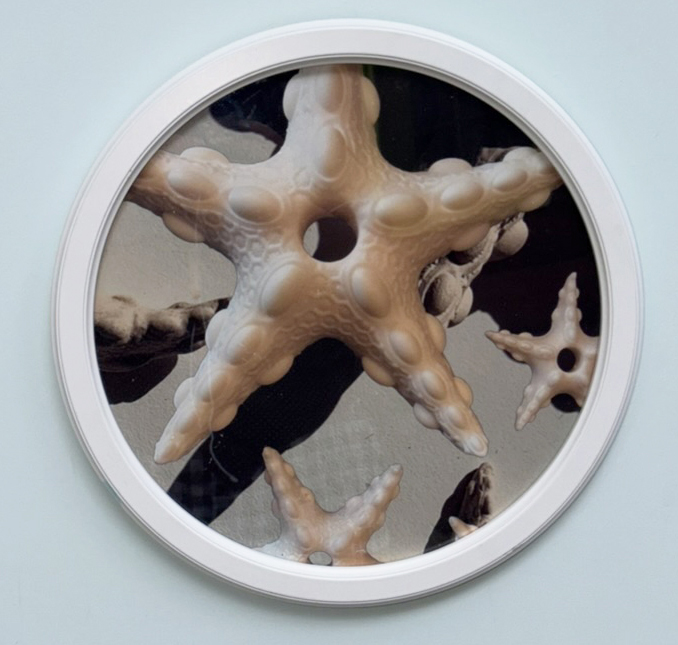
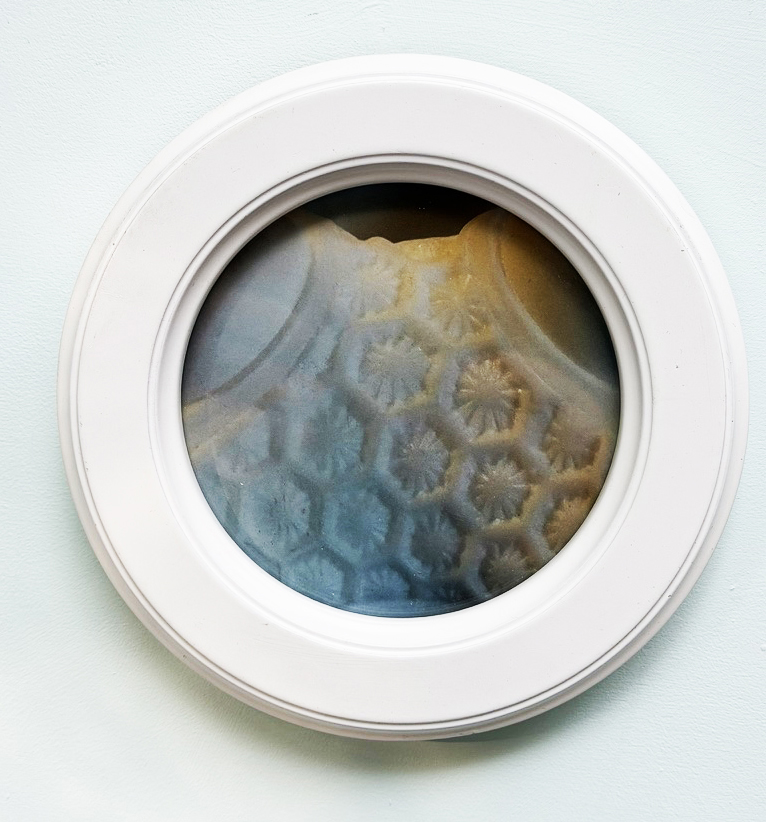
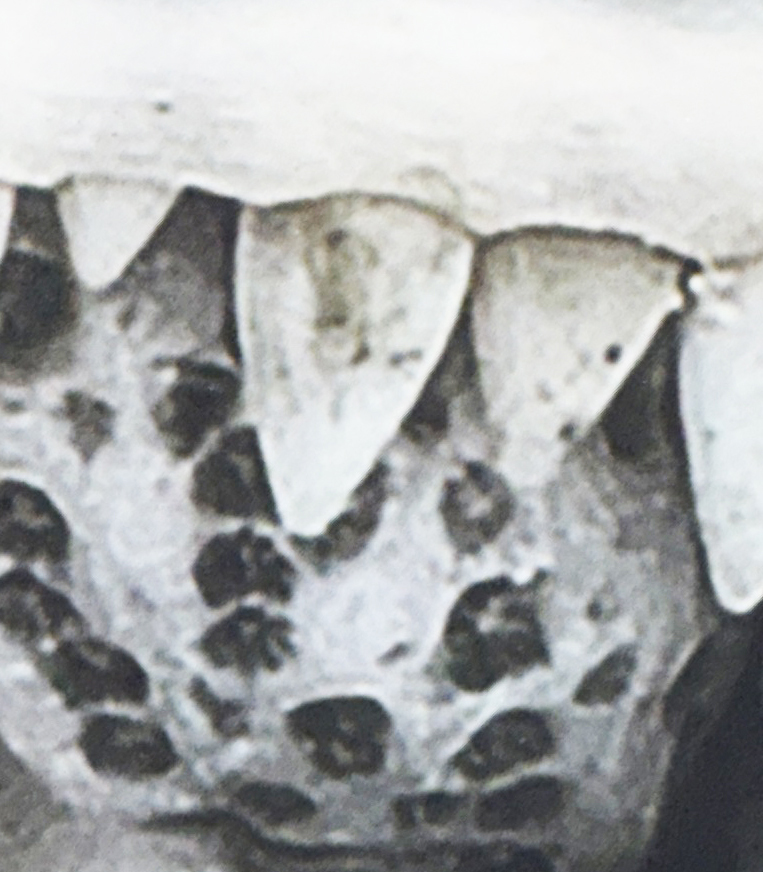
- Estrellas del Océano: “Stars for the Ocean” -detail This detailed view of the coral substrate for the Ocean Star Coral Larval Propagation showcases a design that faithfully mimics the intricate shapes and textures of natural coral skeletons, complete with their nooks and crannies. By replicating these complex structures, the substrate provides an ideal environment for coral larvae to settle and grow, merging artistic precision with scientific oration. Framed Archival Print 3”X3”X.5” 2023
- Estrellas del Océano: “Stars for the Ocean“: They are designed to grow the nascent fertilized cross-bred gametes, in the Sextual Coral Larval Propagation in protected nurseries and then the stars are placed in nooks and crannies on top of the hard coral reefs. Composed of hard-fire clay has a low porosity and is lasts longer in marine environments. They are designed to grow the nascent fertilized cross-bred gametes, in the Sextual Coral Larval Propagation in protected nurseries and then the stars are placed in nooks and crannies on top of the hard coral reefs.
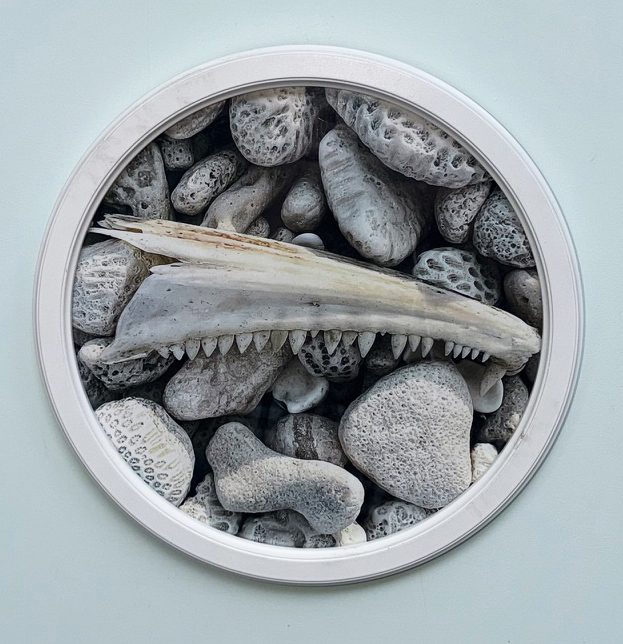
- Coral Bones and Barracuda Jaw: This photograph captures coral skeletons from Guanahacabibes Peninsula, the westernmost point in Cuba, highlighting the global increase in coral skeleton buildup due to widespread coral bleaching. By recycling these skeletons into carbon dioxide sequestering material, we could create artificial reef substrates that attract coral and other marine organisms, fostering new growth and restoring vital marine ecosystems. Framed Archival Print 12”X12”X.5” 2024
No responses yet